
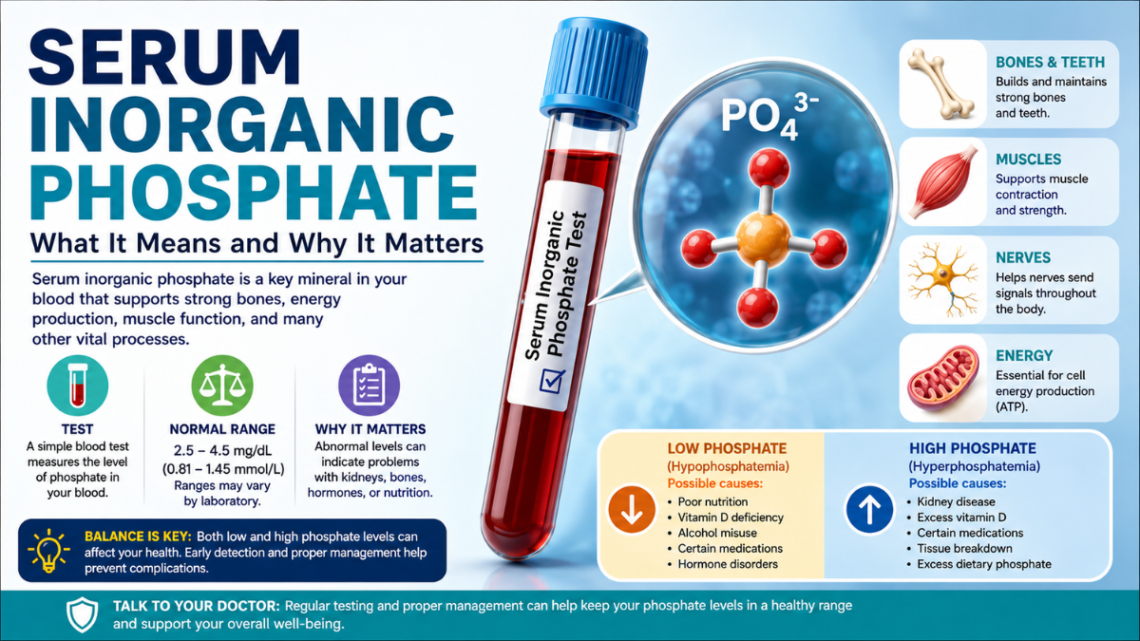
Have you ever looked at your blood test results and noticed a value called serum inorganic phosphate without knowing what it actually measures? You’re not alone. Many people receive routine blood work that includes phosphate levels, but few understand why doctors pay attention to this seemingly small number.
Your serum inorganic phosphate level plays a vital role in keeping your bones strong, your muscles functioning properly, your nerves communicating effectively, and your cells producing energy. Even slight changes can provide valuable clues about your kidney function, hormone balance, nutrition, or underlying medical conditions.
Whether your report shows serum inorganic phosphate low, serum inorganic phosphate high, or you’re simply wondering what is serum inorganic phosphate, this guide explains everything in clear, practical language. You’ll learn how the serum inorganic phosphate test works, understand the serum inorganic phosphate normal range, discover what causes abnormal results, and find practical advice on what steps to take next. By the end, you’ll be able to understand your test results with much greater confidence.
What Is Serum Inorganic Phosphate?
If you’re asking, what is serum inorganic phosphate, the answer is straightforward.
Serum inorganic phosphate is the amount of phosphate circulating in the liquid portion of your blood. Phosphate is a mineral that contains phosphorus, one of the body’s essential nutrients.
Your body uses phosphate to:
- Build and maintain healthy bones and teeth
- Produce energy within cells (ATP)
- Support muscle contractions
- Help nerves send signals
- Repair tissues
- Build DNA and RNA
- Maintain normal acid-base balance
Although about 85% of phosphate is stored in bones, a small amount circulates in your bloodstream. That small amount is carefully regulated because it reflects how well your kidneys, intestines, bones, and hormones work together.
Why Doctors Order a Serum Inorganic Phosphate Test
A serum inorganic phosphate test is often included with other blood tests when doctors want to evaluate overall health or investigate specific symptoms.
Common reasons include:
- Chronic kidney disease
- Bone pain or fractures
- Muscle weakness
- Persistent fatigue
- Vitamin D deficiency
- Parathyroid disorders
- Malnutrition
- Unexplained abnormal calcium levels
- Monitoring dialysis patients
- Evaluating certain hormone disorders
The test requires only a small blood sample and usually doesn’t take more than a few minutes.
Serum Inorganic Phosphate Normal Range
The serum inorganic phosphate normal range varies slightly between laboratories because different testing methods are used.
For healthy adults, the typical range is approximately:
- 2.5–4.5 mg/dL
- 0.81–1.45 mmol/L
Children naturally have higher phosphate levels because their bones are actively growing.
It’s important to remember that one slightly abnormal result doesn’t always indicate disease. Doctors interpret phosphate alongside:
- Calcium
- Vitamin D
- Kidney function tests
- Magnesium
- Parathyroid hormone (PTH)
- Medical history
- Symptoms
Serum Inorganic Phosphate Low: Causes and Symptoms
When your report shows serum inorganic phosphate low, the condition is called hypophosphatemia.
Many people with mild reductions have no symptoms. More significant deficiencies can affect nearly every organ system.
Common Causes of Low Serum Inorganic Phosphate
Possible causes include:
- Poor nutrition
- Alcohol misuse
- Vitamin D deficiency
- Hyperparathyroidism
- Certain medications
- Severe burns
- Uncontrolled diabetes
- Digestive disorders causing poor absorption
- Recovery after diabetic ketoacidosis
- Refeeding syndrome after prolonged starvation
Symptoms
Symptoms may include:
- Fatigue
- Muscle weakness
- Bone pain
- Difficulty walking
- Loss of appetite
- Numbness
- Confusion
- Frequent fractures
- Irregular heartbeat in severe cases
Practical Example
Someone recovering from prolonged illness may begin eating normally again. As cells rapidly absorb phosphate to produce energy, blood phosphate levels may temporarily drop. This is why doctors closely monitor nutrition during recovery from severe illness.
Serum Inorganic Phosphate High: Causes and Symptoms
A high serum inorganic phosphate level is called hyperphosphatemia.
Unlike low phosphate, elevated phosphate often develops because the kidneys cannot remove excess phosphorus effectively.
Common Causes
- Chronic kidney disease
- Kidney failure
- Hypoparathyroidism
- Excess vitamin D intake
- Certain laxatives containing phosphate
- Tumor lysis syndrome
- Severe muscle injury
- Excess dietary phosphorus in vulnerable individuals
Symptoms
Many people have no symptoms initially.
As levels rise, they may develop:
- Muscle cramps
- Joint pain
- Itching
- Red eyes
- Tingling
- Bone discomfort
- Calcium deposits in tissues over time
One important concern is that prolonged high phosphate can combine with calcium, leading to deposits in blood vessels and increasing cardiovascular risk.
How the Body Controls Phosphate Levels
Your body constantly balances phosphate using several organs.
Kidneys
Healthy kidneys remove excess phosphate through urine.
Intestines
The digestive system absorbs phosphate from food.
Bones
Bones store and release phosphate when needed.
Hormones
Several hormones regulate phosphate balance:
- Vitamin D
- Parathyroid hormone (PTH)
- Fibroblast Growth Factor 23 (FGF23)
These systems work together to maintain a healthy serum inorganic phosphate level despite daily dietary changes.
Foods That Affect Phosphate Levels
Phosphorus is naturally present in many foods.
Foods rich in phosphorus include:
- Dairy products
- Meat
- Fish
- Poultry
- Eggs
- Beans
- Lentils
- Nuts
- Whole grains
An important insight that many people overlook is that phosphorus from processed foods is often absorbed much more efficiently than phosphorus naturally found in whole foods. Food manufacturers frequently add phosphate preservatives to processed meats, packaged baked goods, soft drinks, and convenience foods. For people with kidney disease, these hidden additives can significantly increase phosphate intake.
How the Serum Inorganic Phosphate Test Is Performed
The serum inorganic phosphate test is simple.
A healthcare professional:
- Cleans the skin.
- Draws blood from a vein.
- Sends the sample to the laboratory.
- Results are often available within 24 hours.
Some laboratories recommend fasting, while others do not. Follow your healthcare provider’s instructions.
Understanding Your Test Results
Your phosphate result should never be interpreted alone.
Doctors usually compare it with:
| Test | Why It Matters |
| Calcium | Closely linked to phosphate regulation |
| Vitamin D | Controls phosphate absorption |
| Kidney function | Determines phosphate removal |
| Magnesium | Influences mineral balance |
| PTH | Regulates calcium and phosphate together |
Looking at these results together provides a much clearer picture than focusing on phosphate alone.
Treatment for Low Serum Inorganic Phosphate
Treatment depends on the cause.
Options may include:
- Improving nutrition
- Treating vitamin D deficiency
- Oral phosphate supplements
- Intravenous phosphate for severe deficiency
- Managing hormone disorders
- Adjusting medications
Doctors avoid replacing phosphate too quickly because rapid correction can create dangerous shifts in other minerals.
Treatment for High Serum Inorganic Phosphate
Managing high serum inorganic phosphate focuses on reducing phosphate levels safely.
Treatment may involve:
- Treating kidney disease
- Limiting dietary phosphorus
- Prescribing phosphate binders
- Adjusting vitamin D medications
- Dialysis for advanced kidney disease
Regular monitoring is especially important for people with chronic kidney disease.
Common Mistakes When Interpreting Phosphate Results
Many people misunderstand phosphate test results.
Avoid these common mistakes:
- Assuming one abnormal test confirms disease
- Ignoring symptoms despite a normal result
- Taking supplements without medical advice
- Focusing only on phosphate while overlooking kidney function
- Confusing phosphorus intake with blood phosphate levels
Your overall health picture matters more than a single number.
Unique Insights Most Articles Don’t Mention
Daily Timing Can Influence Results
Phosphate levels naturally fluctuate throughout the day because hormones and meals influence phosphate movement between the bloodstream and cells. For consistent monitoring, repeat tests are often performed under similar conditions.
Athletic Recovery Can Temporarily Affect Levels
Intense endurance exercise may briefly alter phosphate distribution as muscles rapidly use energy. In most healthy individuals, levels normalize quickly without treatment.
Processed Foods Matter More Than Many Realize
Two people may consume similar amounts of phosphorus, but the one eating mostly processed foods often absorbs considerably more because food additives are highly bioavailable. Reading ingredient labels for terms containing “phosphate” can be surprisingly helpful for people who need to limit phosphorus intake.
When Should You See a Doctor?
Contact a healthcare provider if you experience:
- Persistent muscle weakness
- Bone pain
- Frequent fractures
- Severe fatigue
- Muscle cramps
- Tingling
- Kidney disease with abnormal blood tests
- Unexplained abnormal calcium or phosphate levels
Prompt evaluation helps identify the underlying cause before complications develop.
Frequently Asked Questions
What is serum inorganic phosphate and why is it important?
Serum inorganic phosphate measures the amount of phosphate circulating in your blood. It is essential for healthy bones, energy production, muscle function, nerve signaling, and many cellular processes. Abnormal levels may indicate kidney disease, hormonal disorders, nutritional deficiencies, or other medical conditions.
What causes low serum inorganic phosphate?
Low serum inorganic phosphate may result from poor nutrition, vitamin D deficiency, digestive disorders, alcohol misuse, hyperparathyroidism, certain medications, or recovery from severe illness. Treatment depends on identifying and correcting the underlying cause rather than simply increasing phosphate intake.
What causes high serum inorganic phosphate?
High serum inorganic phosphate is most commonly caused by chronic kidney disease because the kidneys cannot remove excess phosphate effectively. Other causes include hypoparathyroidism, excess vitamin D, severe tissue injury, and some medications. Doctors usually evaluate kidney function and calcium levels alongside phosphate.
What is the serum inorganic phosphate normal range for adults?
The serum inorganic phosphate normal range is generally between 2.5 and 4.5 mg/dL, although laboratory reference ranges may differ slightly. Your healthcare provider interprets your results based on your age, symptoms, medical history, and other blood tests.
Do I need to fast before a serum inorganic phosphate test?
Not always. Some laboratories request fasting while others do not. Your healthcare provider will tell you whether fasting is necessary based on the reason for testing and any additional blood work being performed.
Conclusion
Understanding your serum inorganic phosphate level provides valuable insight into your overall health. Whether your results show serum inorganic phosphate low, serum inorganic phosphate high, or fall within the normal range, they represent only one part of a much larger clinical picture.
The serum inorganic phosphate test is a useful tool for evaluating kidney function, bone health, hormone balance, and nutritional status. Rather than focusing on a single number, it’s important to consider your symptoms, medical history, and related laboratory results together.
If your phosphate levels are abnormal, don’t panic. Many causes are treatable, especially when identified early. Working closely with your healthcare provider ensures that the underlying issue is properly diagnosed and managed, helping you maintain long-term health and reduce the risk of complications.Serum Inorganic Phosphate: What It Means and Why It Matters
Have you ever looked at your blood test results and noticed a value called serum inorganic phosphate without knowing what it actually measures? You’re not alone. Many people receive routine blood work that includes phosphate levels, but few understand why doctors pay attention to this seemingly small number.
Your serum inorganic phosphate level plays a vital role in keeping your bones strong, your muscles functioning properly, your nerves communicating effectively, and your cells producing energy. Even slight changes can provide valuable clues about your kidney function, hormone balance, nutrition, or underlying medical conditions.
Whether your report shows serum inorganic phosphate low, serum inorganic phosphate high, or you’re simply wondering what is serum inorganic phosphate, this guide explains everything in clear, practical language. You’ll learn how the serum inorganic phosphate test works, understand the serum inorganic phosphate normal range, discover what causes abnormal results, and find practical advice on what steps to take next. By the end, you’ll be able to understand your test results with much greater confidence.
What Is Serum Inorganic Phosphate?
If you’re asking, what is serum inorganic phosphate, the answer is straightforward.
Serum inorganic phosphate is the amount of phosphate circulating in the liquid portion of your blood. Phosphate is a mineral that contains phosphorus, one of the body’s essential nutrients.
Your body uses phosphate to:
- Build and maintain healthy bones and teeth
- Produce energy within cells (ATP)
- Support muscle contractions
- Help nerves send signals
- Repair tissues
- Build DNA and RNA
- Maintain normal acid-base balance
Although about 85% of phosphate is stored in bones, a small amount circulates in your bloodstream. That small amount is carefully regulated because it reflects how well your kidneys, intestines, bones, and hormones work together.
Why Doctors Order a Serum Inorganic Phosphate Test
A serum inorganic phosphate test is often included with other blood tests when doctors want to evaluate overall health or investigate specific symptoms.
Common reasons include:
- Chronic kidney disease
- Bone pain or fractures
- Muscle weakness
- Persistent fatigue
- Vitamin D deficiency
- Parathyroid disorders
- Malnutrition
- Unexplained abnormal calcium levels
- Monitoring dialysis patients
- Evaluating certain hormone disorders
The test requires only a small blood sample and usually doesn’t take more than a few minutes.
Serum Inorganic Phosphate Normal Range
The serum inorganic phosphate normal range varies slightly between laboratories because different testing methods are used.
For healthy adults, the typical range is approximately:
- 2.5–4.5 mg/dL
- 0.81–1.45 mmol/L
Children naturally have higher phosphate levels because their bones are actively growing.
It’s important to remember that one slightly abnormal result doesn’t always indicate disease. Doctors interpret phosphate alongside:
- Calcium
- Vitamin D
- Kidney function tests
- Magnesium
- Parathyroid hormone (PTH)
- Medical history
- Symptoms
Serum Inorganic Phosphate Low: Causes and Symptoms
When your report shows serum inorganic phosphate low, the condition is called hypophosphatemia.
Many people with mild reductions have no symptoms. More significant deficiencies can affect nearly every organ system.
Common Causes of Low Serum Inorganic Phosphate
Possible causes include:
- Poor nutrition
- Alcohol misuse
- Vitamin D deficiency
- Hyperparathyroidism
- Certain medications
- Severe burns
- Uncontrolled diabetes
- Digestive disorders causing poor absorption
- Recovery after diabetic ketoacidosis
- Refeeding syndrome after prolonged starvation
Symptoms
Symptoms may include:
- Fatigue
- Muscle weakness
- Bone pain
- Difficulty walking
- Loss of appetite
- Numbness
- Confusion
- Frequent fractures
- Irregular heartbeat in severe cases
Practical Example
Someone recovering from prolonged illness may begin eating normally again. As cells rapidly absorb phosphate to produce energy, blood phosphate levels may temporarily drop. This is why doctors closely monitor nutrition during recovery from severe illness.
Serum Inorganic Phosphate High: Causes and Symptoms
A high serum inorganic phosphate level is called hyperphosphatemia.
Unlike low phosphate, elevated phosphate often develops because the kidneys cannot remove excess phosphorus effectively.
Common Causes
- Chronic kidney disease
- Kidney failure
- Hypoparathyroidism
- Excess vitamin D intake
- Certain laxatives containing phosphate
- Tumor lysis syndrome
- Severe muscle injury
- Excess dietary phosphorus in vulnerable individuals
Symptoms
Many people have no symptoms initially.
As levels rise, they may develop:
- Muscle cramps
- Joint pain
- Itching
- Red eyes
- Tingling
- Bone discomfort
- Calcium deposits in tissues over time
One important concern is that prolonged high phosphate can combine with calcium, leading to deposits in blood vessels and increasing cardiovascular risk.
How the Body Controls Phosphate Levels
Your body constantly balances phosphate using several organs.
Kidneys
Healthy kidneys remove excess phosphate through urine.
Intestines
The digestive system absorbs phosphate from food.
Bones
Bones store and release phosphate when needed.
Hormones
Several hormones regulate phosphate balance:
- Vitamin D
- Parathyroid hormone (PTH)
- Fibroblast Growth Factor 23 (FGF23)
These systems work together to maintain a healthy serum inorganic phosphate level despite daily dietary changes.
Foods That Affect Phosphate Levels
Phosphorus is naturally present in many foods.
Foods rich in phosphorus include:
- Dairy products
- Meat
- Fish
- Poultry
- Eggs
- Beans
- Lentils
- Nuts
- Whole grains
An important insight that many people overlook is that phosphorus from processed foods is often absorbed much more efficiently than phosphorus naturally found in whole foods. Food manufacturers frequently add phosphate preservatives to processed meats, packaged baked goods, soft drinks, and convenience foods. For people with kidney disease, these hidden additives can significantly increase phosphate intake.
How the Serum Inorganic Phosphate Test Is Performed
The serum inorganic phosphate test is simple.
A healthcare professional:
- Cleans the skin.
- Draws blood from a vein.
- Sends the sample to the laboratory.
- Results are often available within 24 hours.
Some laboratories recommend fasting, while others do not. Follow your healthcare provider’s instructions.
Understanding Your Test Results
Your phosphate result should never be interpreted alone.
Doctors usually compare it with:
| Test | Why It Matters |
| Calcium | Closely linked to phosphate regulation |
| Vitamin D | Controls phosphate absorption |
| Kidney function | Determines phosphate removal |
| Magnesium | Influences mineral balance |
| PTH | Regulates calcium and phosphate together |
Looking at these results together provides a much clearer picture than focusing on phosphate alone.
Treatment for Low Serum Inorganic Phosphate
Treatment depends on the cause.
Options may include:
- Improving nutrition
- Treating vitamin D deficiency
- Oral phosphate supplements
- Intravenous phosphate for severe deficiency
- Managing hormone disorders
- Adjusting medications
Doctors avoid replacing phosphate too quickly because rapid correction can create dangerous shifts in other minerals.
Treatment for High Serum Inorganic Phosphate
Managing high serum inorganic phosphate focuses on reducing phosphate levels safely.
Treatment may involve:
- Treating kidney disease
- Limiting dietary phosphorus
- Prescribing phosphate binders
- Adjusting vitamin D medications
- Dialysis for advanced kidney disease
Regular monitoring is especially important for people with chronic kidney disease.
Common Mistakes When Interpreting Phosphate Results
Many people misunderstand phosphate test results.
Avoid these common mistakes:
- Assuming one abnormal test confirms disease
- Ignoring symptoms despite a normal result
- Taking supplements without medical advice
- Focusing only on phosphate while overlooking kidney function
- Confusing phosphorus intake with blood phosphate levels
Your overall health picture matters more than a single number.
Unique Insights Most Articles Don’t Mention
Daily Timing Can Influence Results
Phosphate levels naturally fluctuate throughout the day because hormones and meals influence phosphate movement between the bloodstream and cells. For consistent monitoring, repeat tests are often performed under similar conditions.
Athletic Recovery Can Temporarily Affect Levels
Intense endurance exercise may briefly alter phosphate distribution as muscles rapidly use energy. In most healthy individuals, levels normalize quickly without treatment.
Processed Foods Matter More Than Many Realize
Two people may consume similar amounts of phosphorus, but the one eating mostly processed foods often absorbs considerably more because food additives are highly bioavailable. Reading ingredient labels for terms containing “phosphate” can be surprisingly helpful for people who need to limit phosphorus intake.
When Should You See a Doctor?
Contact a healthcare provider if you experience:
- Persistent muscle weakness
- Bone pain
- Frequent fractures
- Severe fatigue
- Muscle cramps
- Tingling
- Kidney disease with abnormal blood tests
- Unexplained abnormal calcium or phosphate levels
Prompt evaluation helps identify the underlying cause before complications develop.
Frequently Asked Questions
What is serum inorganic phosphate and why is it important?
Serum inorganic phosphate measures the amount of phosphate circulating in your blood. It is essential for healthy bones, energy production, muscle function, nerve signaling, and many cellular processes. Abnormal levels may indicate kidney disease, hormonal disorders, nutritional deficiencies, or other medical conditions.
What causes low serum inorganic phosphate?
Low serum inorganic phosphate may result from poor nutrition, vitamin D deficiency, digestive disorders, alcohol misuse, hyperparathyroidism, certain medications, or recovery from severe illness. Treatment depends on identifying and correcting the underlying cause rather than simply increasing phosphate intake.
What causes high serum inorganic phosphate?
High serum inorganic phosphate is most commonly caused by chronic kidney disease because the kidneys cannot remove excess phosphate effectively. Other causes include hypoparathyroidism, excess vitamin D, severe tissue injury, and some medications. Doctors usually evaluate kidney function and calcium levels alongside phosphate.
What is the serum inorganic phosphate normal range for adults?
The serum inorganic phosphate normal range is generally between 2.5 and 4.5 mg/dL, although laboratory reference ranges may differ slightly. Your healthcare provider interprets your results based on your age, symptoms, medical history, and other blood tests.
Do I need to fast before a serum inorganic phosphate test?
Not always. Some laboratories request fasting while others do not. Your healthcare provider will tell you whether fasting is necessary based on the reason for testing and any additional blood work being performed.
Conclusion
Understanding your serum inorganic phosphate level provides valuable insight into your overall health. Whether your results show serum inorganic phosphate low, serum inorganic phosphate high, or fall within the normal range, they represent only one part of a much larger clinical picture.
The serum inorganic phosphate test is a useful tool for evaluating kidney function, bone health, hormone balance, and nutritional status. Rather than focusing on a single number, it’s important to consider your symptoms, medical history, and related laboratory results together.
If your phosphate levels are abnormal, don’t panic. Many causes are treatable, especially when identified early. Working closely with your healthcare provider ensures that the underlying issue is properly diagnosed and managed, helping you maintain long-term health and reduce the risk of complications.

